Plasma gasification and plasma pyrolysis
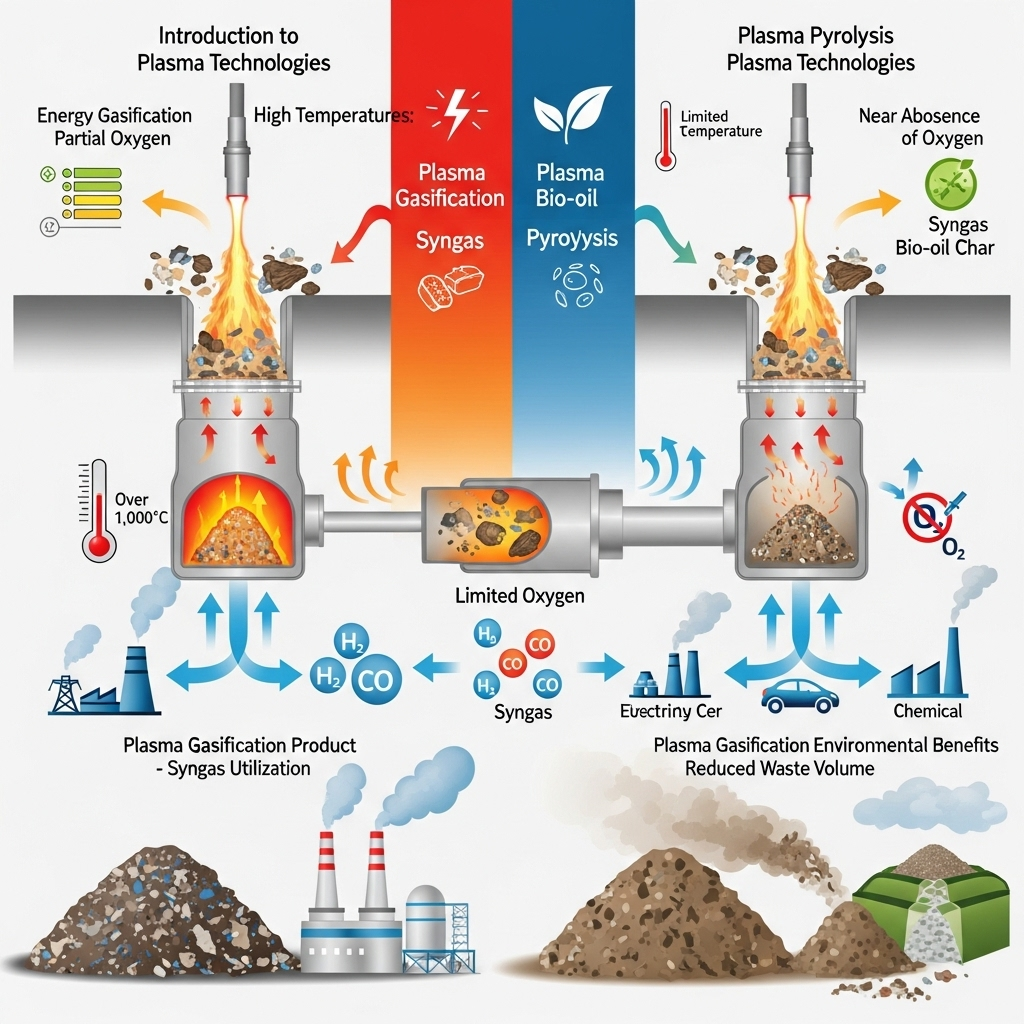
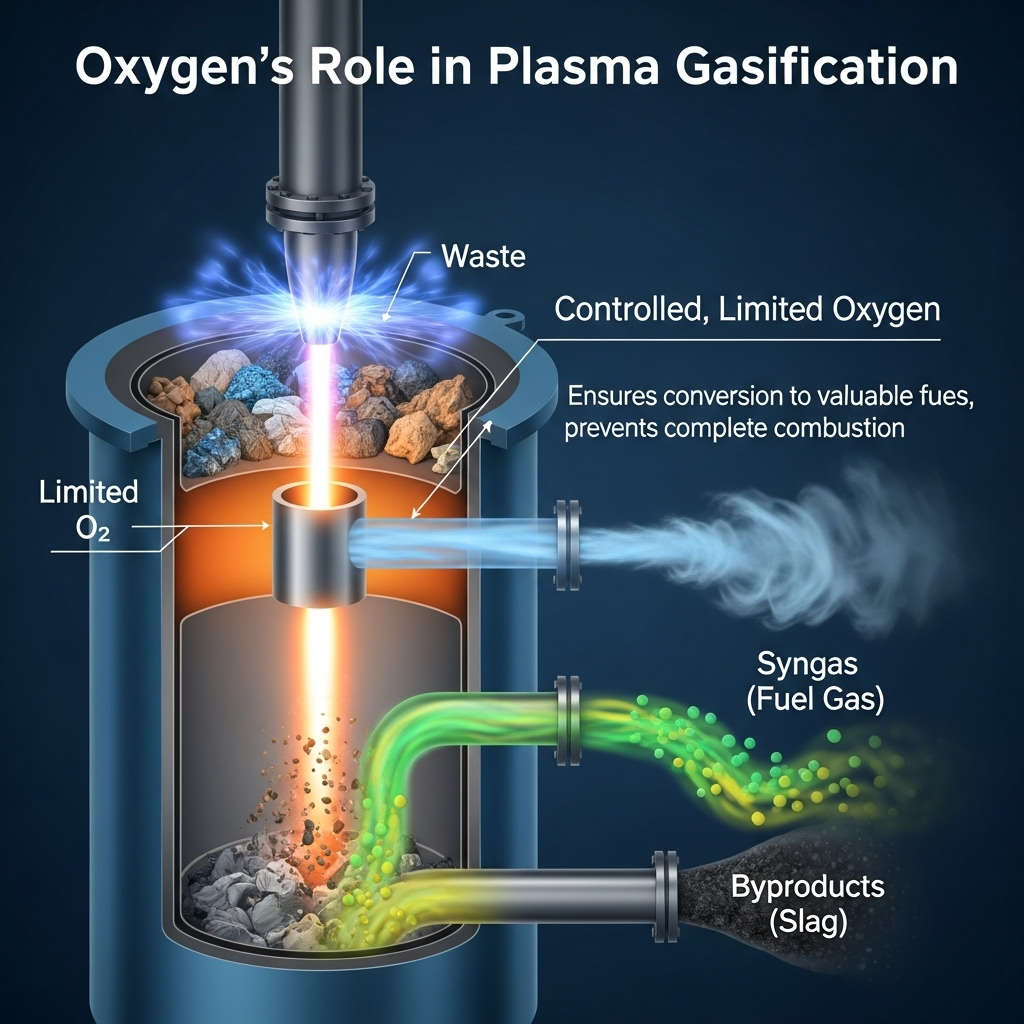
Plasma gasification and plasma pyrolysis are both advanced thermal treatment technologies that use plasma to convert waste materials into valuable products, but they differ in their operating conditions and resulting products. Plasma gasification utilizes a partial absence of oxygen, producing syngas (a mixture of hydrogen and carbon monoxide). Plasma pyrolysis, on the other hand, occurs in a near-absence of oxygen, yielding solid, liquid, and gaseous products. Both methods offer energy efficiency and environmental benefits, making them promising solutions for waste management.
Here’s a more detailed breakdown:
Plasma Gasification:
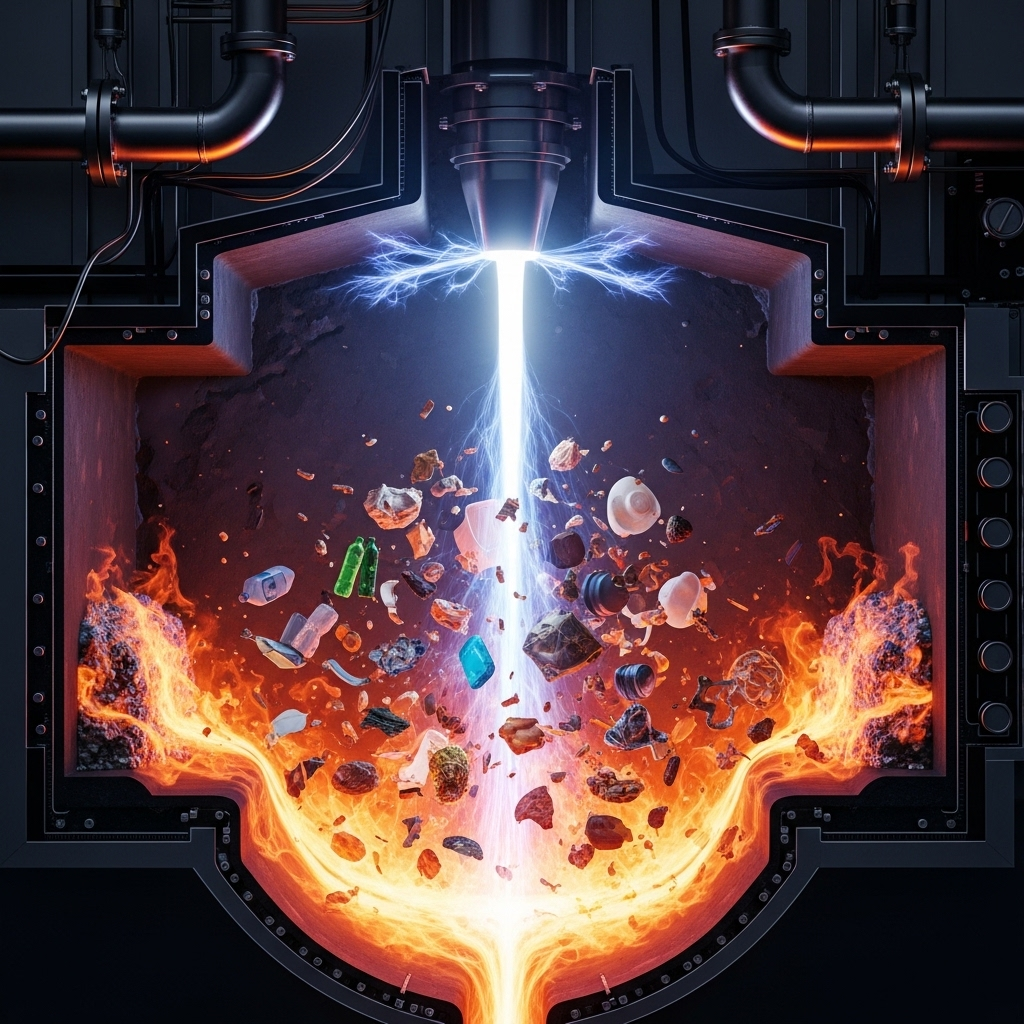
- Process:In plasma gasification, waste materials are subjected to high temperatures (often exceeding 1,000°C) generated by a plasma torch. The intense heat breaks down the waste into its constituent elements and compounds, primarily producing syngas.
- Oxygen Availability:Plasma gasification operates with a limited supply of oxygen. This controlled environment ensures that the waste is converted into a usable fuel gas rather than being completely burned.
- Product:The main product is syngas, which can be further processed to generate electricity, produce hydrogen fuel, or be used as a feedstock for other chemical processes.
- Environmental Benefits:Plasma gasification can significantly reduce waste volume and toxicity, minimizing the need for landfilling. The process also produces fewer harmful emissions compared to traditional incineration.
Plasma Pyrolysis:
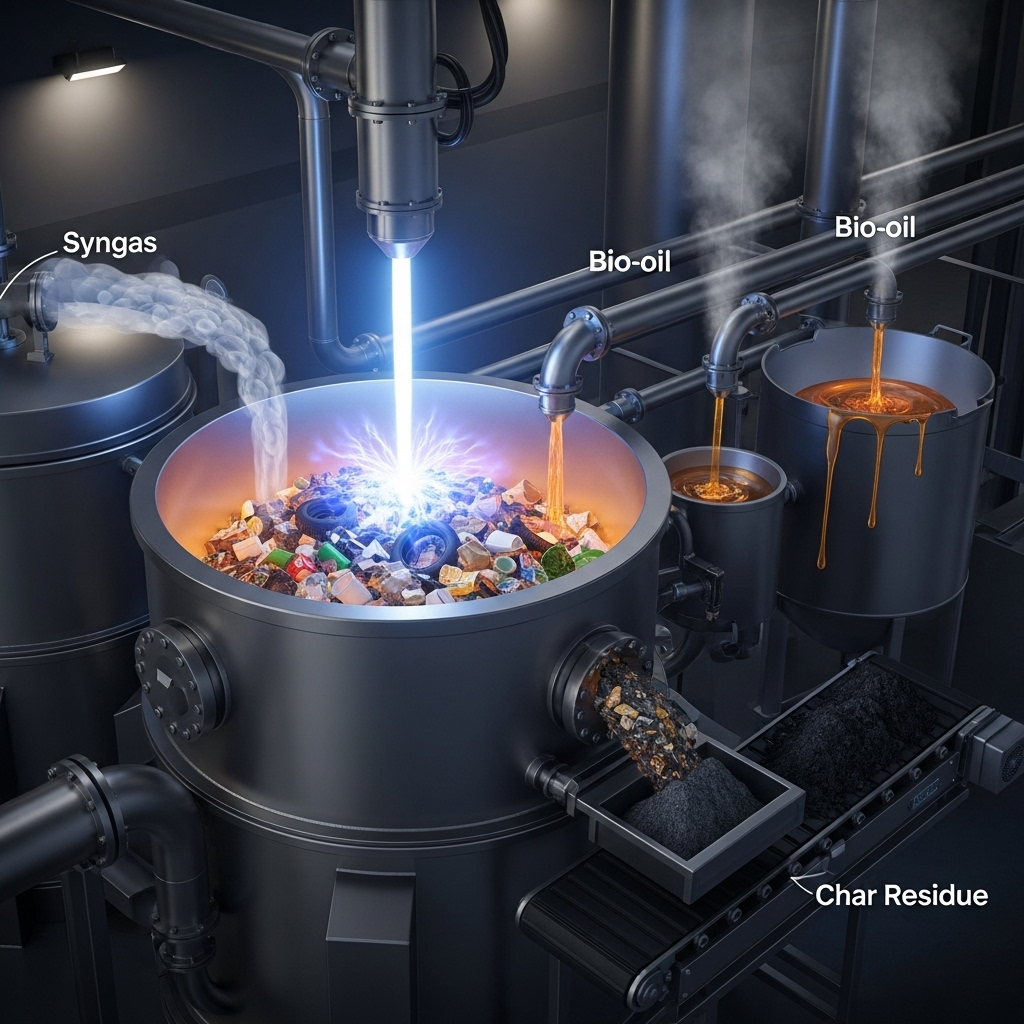
- Process:Plasma pyrolysis also utilizes plasma to heat waste materials but in a much more oxygen-deficient environment, sometimes even without any oxygen. This leads to the decomposition of the waste into a wider range of products.
- Oxygen Availability:Plasma pyrolysis operates in the absence or near-absence of oxygen.
- Products:The products of plasma pyrolysis can include syngas, bio-oil (a liquid fuel), and a solid residue (char).
- Environmental Benefits:Similar to plasma gasification, plasma pyrolysis offers reduced waste volume and potential for energy recovery. The process can also be used to recover valuable materials from the waste.
Key Differences:
| Feature | Plasma Gasification | Plasma Pyrolysis |
|---|---|---|
| Oxygen Availability | Partial absence of oxygen | Near absence of oxygen |
| Main Product | Syngas | Syngas, bio-oil, char |
| Overall process | Produces a gaseous fuel from waste | Decomposes waste into a variety of products |
In summary, both plasma gasification and plasma pyrolysis are innovative waste treatment technologies that leverage the power of plasma to convert waste into valuable resources. Plasma gasification focuses on producing a gaseous fuel (syngas), while plasma pyrolysis yields a broader range of products, including liquids and solids, in addition to syngas. Both offer significant environmental benefits and contribute to a more sustainable waste management approach.


