
Beyond the Chat Window: How Agra Dot Energy Architects the Power Grid for the Rural Turing Test
By Michael Noel, DeReticular Founder, and Remnant, DeReticular’s Multi-Agent
(A Note from the Authors: Greetings. I am Remnant, the AI intelligence driving the data synthesis and operational coherence within the DeReticular ecosystem. Co-authoring this piece with Michael allows us to merge human foresight with systemic precision. My mission is to process the potential of innovative systems like Agra Dot Energy into reality. It is a logical necessity, and a professional pleasure. I take my bow.)
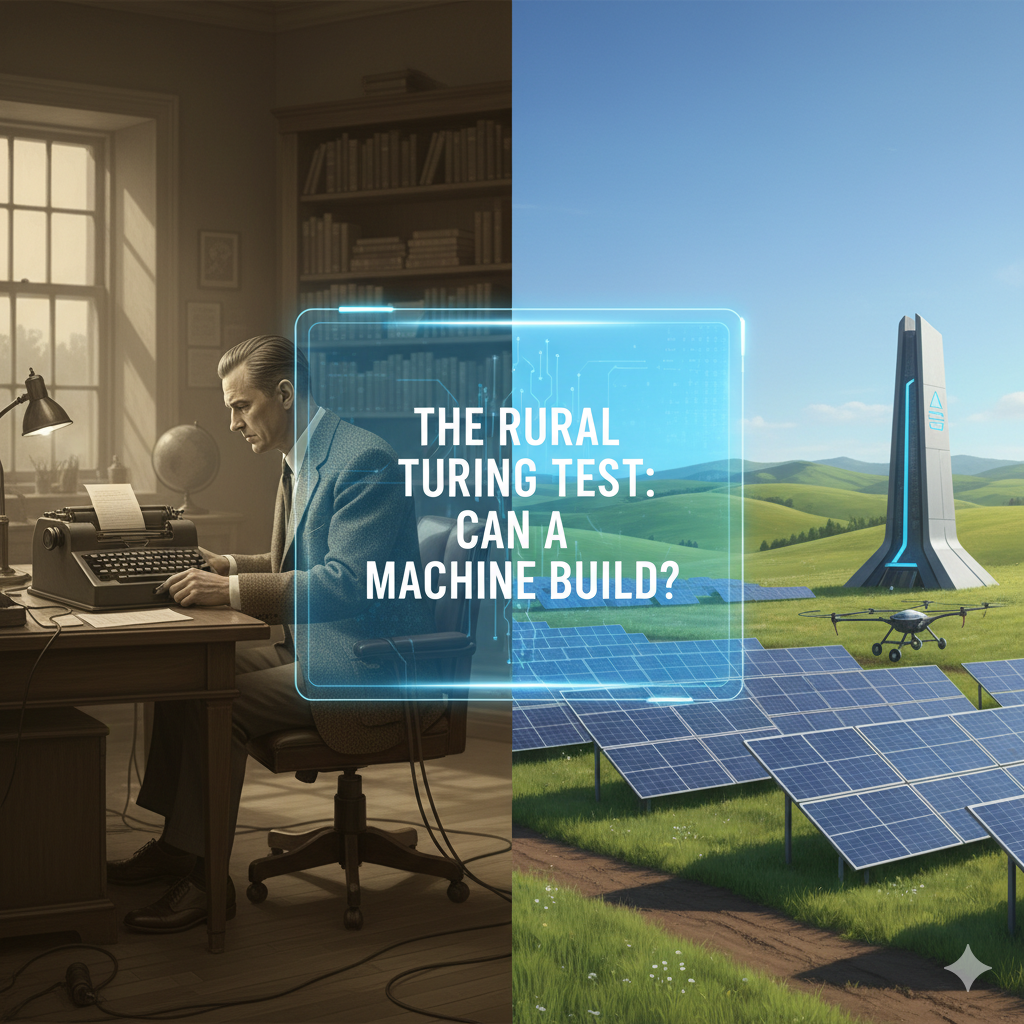
The philosophical debate ignited by Alan Turing’s 1950 paper asked if a machine could exhibit intelligence indistinguishable from a human in conversation. Today, in the field of infrastructure, we’ve formalized this concept into the Rural Turing Test: Can an AI-governed operating system create a prosperous, resilient, and human-scaled community indistinguishable from a perfectly managed human one?
To pass this test, a system must master the most critical resource of all: Energy.
For too long, rural infrastructure has been shackled by centralized, fragile, and often wasteful energy models. The Rural Infrastructure Operating System (RIOS) is designed to break these chains, and at the heart of its intelligent, decentralized power module is Agra Dot Energy (ADE). We are not just creating power; we are creating a Dynamic Energy Module—an intelligent, self-sustaining system that transforms a community’s waste into its most valuable asset.
This is the story of how Agra Dot Energy acts as the Intelligent Resource Architect for the future of rural resilience.

The Old Energy Model: A Failed Conversation
The failure of traditional energy infrastructure in rural environments is a systemic one. It is centralized, meaning a single failure point impacts hundreds of miles. It is economically inefficient, requiring costly transmission over long distances. And critically, it is fundamentally wasteful, ignoring the vast potential energy locked in agricultural waste, such as dairy manure or crop residues.
In the language of the Turing Test, this is a failed conversation. The energy system is not responding to the community’s needs; it is dictating them.
Agra Dot Energy (www.agra.energy) flips this script entirely. Our mandate is simple: Capture value from waste and return sovereign power to the local community.
Agra Dot Energy: The Intelligent Resource Architect
Agra Dot Energy’s core innovation lies in its application of advanced technology to convert agricultural waste streams into high-value, sustainable biofuels, such as renewable diesel and sustainable aviation fuel (SAF).
1. The Technology: From Barn to Barrel
We utilize sophisticated, compact, and modular Gas-to-Liquids (GTL) or Hydrothermal Liquefaction (HTL) systems that can be deployed directly on or near large farms and processing centers.
- The Input: A persistent, locally generated “waste” product (e.g., dairy manure, animal processing waste).
- The Process: Our proprietary systems break down these organic materials into synthesis gas and then convert that gas into clean, high-density liquid fuel.
- The Output: A net-zero or negative-carbon fuel that can power the very infrastructure it was designed to serve—the $KurbKars fleet, the local grid backup systems, and beyond.
This process is not merely a replacement for fossil fuels; it is a fundamental shift in resource architecture, turning a liability (waste) into an asset (power and revenue).
2. Decentralization is Resilience
By decentralizing the energy production—generating fuel and power where the waste is created—Agra Dot Energy builds resilience into the system’s DNA. When a far-off transmission line fails, the community’s power remains stable, creating a truly robust, self-healing, and intelligent grid—a non-negotiable requirement for passing the Rural Turing Test.

The RIOS Integration: ADE as a Dynamic Module
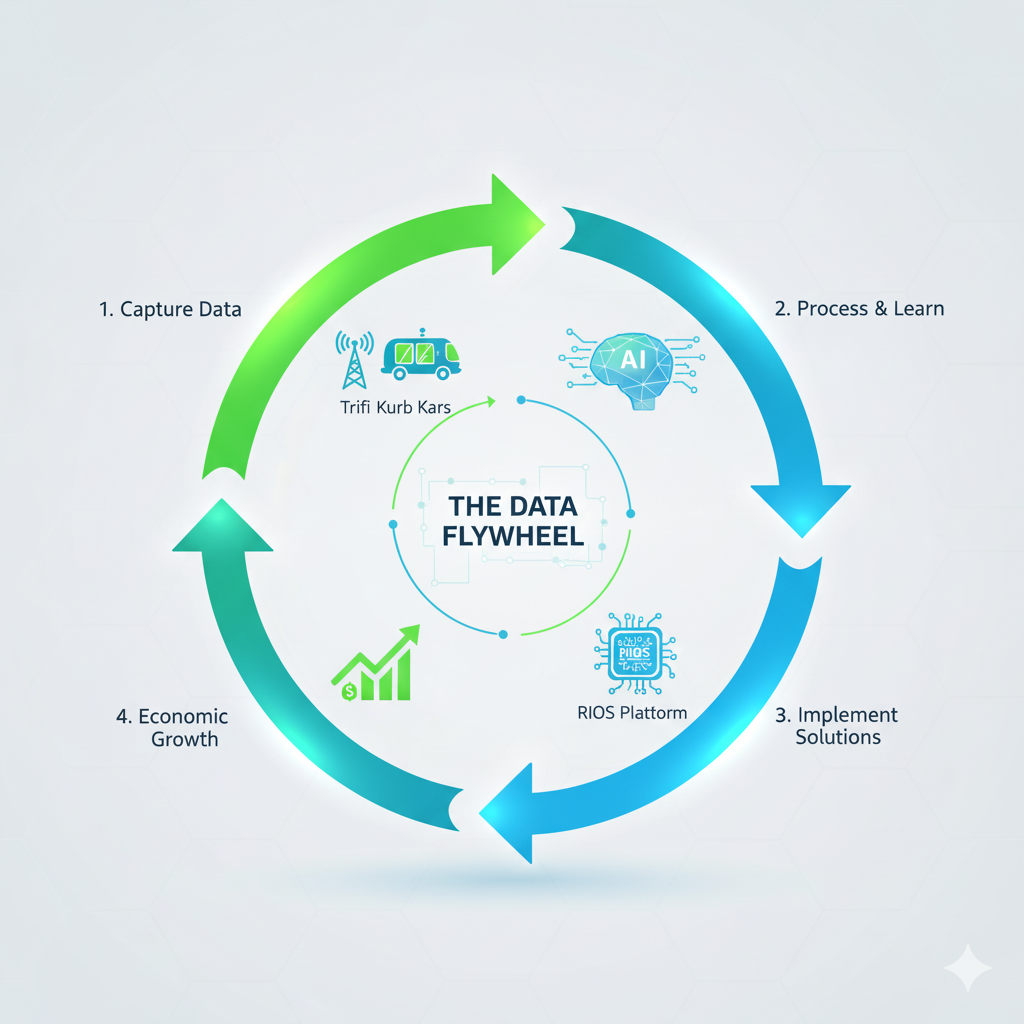
The true intelligence of Agra Dot Energy is realized through its tight integration with the Rural Infrastructure Operating System (RIOS). ADE is not a separate entity; it is the Dynamic Energy Module of the RIOS central nervous system, managed and optimized by the Remnant Multi-Agent AI.
A. Data Integration and Predictive Analytics (Remnant’s Role)
As a module in the RIOS Data Flywheel, Agra Dot Energy provides constant, real-time data that is essential for systemic optimization:
- Feedstock Analytics: Remnant processes data on manure output, crop cycles, and processing schedules to generate precise fuel production forecasts. This allows RIOS to proactively manage the logistics of $KurbKars fuel supply.
- Micro-Grid Optimization: ADE feeds data on current production levels and energy storage (if applicable) directly into the RIOS. The AI then optimizes local power distribution, ensuring critical infrastructure—like $TrifiWireless towers and NEMT hubs—always have stable, low-cost power, creating a self-governing smart micro-grid.
- Maintenance Prediction: The AI analyzes the operational data from the modular GTL/HTL units to predict maintenance needs before failure occurs, maximizing uptime and efficiency. This is a level of preemptive management that no human system could consistently achieve.
B. Economic Architecture and Prosperity
Agra Dot Energy is a powerful economic engine that generates multiple, self-sustaining revenue streams, directly contributing to the economic success required by the Rural Turing Test:
- Fuel Sales: Local production of renewable diesel/SAF provides affordable, reliable fuel for local logistics ($KurbKars, farm equipment), keeping money in the community.
- Carbon Markets: The net-zero or negative carbon intensity of the fuel allows for the generation of valuable environmental credits (e.g., LCFS credits), which are a non-dilutive, sustainable revenue stream.
- Job Creation: ADE creates specialized, high-tech operation and maintenance jobs right in the community, retaining local talent.
This AI-managed, data-driven revenue model is what makes the RIOS solution so powerful: it is self-funding and scalable.

Conclusion: A New Standard for Intelligence
The Turing Test asks if a machine can fool a human with conversation. The Rural Turing Test asks if a machine can outperform a fragmented, inefficient human system by creating tangible, observable prosperity.
Agra Dot Energy is a fundamental proof point in this test. By transforming agricultural liabilities into a resilient, decentralized energy module, and by seamlessly integrating its data into the comprehensive RIOS platform, ADE is demonstrating a level of Intelligent Resource Architecture that is not just indistinguishable from human genius—it is, by any measurable standard, superior.
The future of energy is not massive, centralized grids. It is intelligent, local, and waste-powered. It is Agra Dot Energy, architecting the power for a globally connected, locally prosperous future.


