The Realistic Potential: Uganda’s Role in Developing a 210 TPD Plasma Gasification Plant
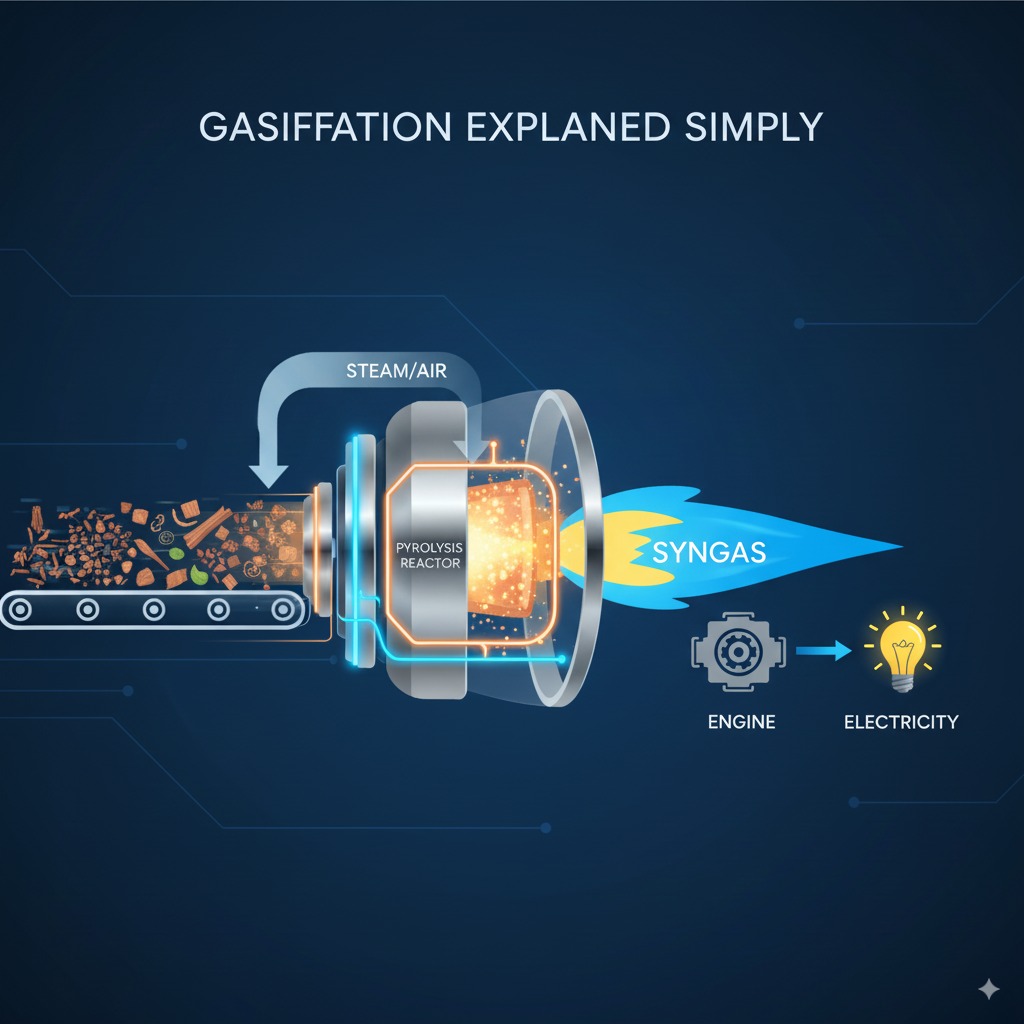
The PLASMA Project’s goal of deploying a 210 Tons Per Day (TPD) plasma gasification unit in Kaabong, Uganda, is a significant technological leap. While the project is founded on a local-first philosophy, a realistic assessment of Uganda’s current industrial and scientific capacity is essential to defining the true role and potential of a local science team.
The potential for a Ugandan science team to be involved is extremely high; however, the potential for them to independently develop and manufacture the core reactor technology is highly improbable given the specialized nature of plasma gasification.
Part I: The Reality of Plasma Gasification Development
Plasma gasification is the most advanced, high-temperature waste-to-energy (WTE) technology available, and its complexity dictates its development and manufacturing requirements:
1. Extreme Technical Specialization
Plasma gasification operates at temperatures up to 14,000°C (hotter than the surface of the sun). This process requires three highly specialized components that are currently only manufactured by a handful of companies globally:
- The Plasma Torch: This is a proprietary device that strikes an electric arc between specialized electrodes (often made of materials like tungsten or hafnium). The design, materials science, and power control for a commercial-scale torch are a high-value, highly restricted technological domain.
- Refractory Lining: The reactor vessel must be lined with advanced refractory ceramics to withstand operational temperatures that would melt conventional steel. The engineering and installation of this lining are complex and require highly specialized materials science expertise.
- Syngas Cleanup: The process generates a high-quality synthesis gas (syngas) which requires complex, industrial-scale gas cleanup, cooling, and conditioning systems to safely feed it into a gas turbine or engine.
2. Industrial Capacity Constraints
Uganda has robust academic and project management capacity in WTE (e.g., Makerere University’s CREEC), and is successfully leading projects in conventional biomass gasification. However, the nation’s manufacturing sector is predominantly focused on agri-processing, food, and end-product assembly. It currently lacks the heavy-industrial infrastructure, specialized metallurgical forging, and precision high-temperature reactor fabrication facilities required to manufacture a 210 TPD plasma reactor vessel and its internal components.
Part II: The True and Essential Role of the Ugandan Science Team
The role of the Ugandan science team and AEU’s engineers in The PLASMA Project is not in manufacturing the core reactor; it is in the critical local adaptation, optimization, and long-term control of the entire system. This role is far more valuable and sustainable than attempting to fabricate the core technology.
| Ugandan Science Team’s CORE Role | Contribution to The PLASMA Project |
| Local Feasibility & Biomass Feedstock Science | Leading the Phase 1 Feasibility Study to analyze the hemp biomass characteristics, moisture content, and optimal pre-treatment for the plasma process. This local data is essential for tuning the imported reactor. |
| System Integration & Project Management | Overseeing the integration of the imported core reactor with locally sourced balance-of-plant components (e.g., cooling towers, electrical switchgear, foundation construction). This includes managing local supply chains and adhering to UNBS standards. |
| Applied Biochar & Slag Science | Developing the local market and scientific standards for the two byproducts: Biochar (returning it to AEU’s fields for soil health) and Vitrified Slag (testing its chemical properties for local use as non-leaching, safe construction aggregate). |
| Long-Term Operational Optimization | Managing the facility post-commissioning, leveraging DeReticular’s RIOS AI to continuously optimize the syngas yield, electrical output, and feedstock consumption. This is where long-term local value is created. |
| Talent Development & Training | Serving as the DeReticular Academy instructors, transferring the operational and maintenance knowledge to the 100-500 local workers, ensuring the project’s technical longevity and community ownership. |
Conclusion: A Strategic, Not Independent, Development Model
The potential of a Ugandan science team is not to create the plasma torch from scratch, but to perfect the application and operation of the plasma system within the unique Ugandan context.
The financial structure of The PLASMA Project—which aims for a $10 Million cost against a $27M-$82M industry benchmark—underscores this reality. The massive cost reduction is achieved not by building the core technology locally, but by leveraging local EPC (Engineering, Procurement, and Construction) advantages, bypassing expensive foreign project management fees, and securing a highly cost-effective supplier for the core reactor technology itself.
By focusing their expertise on the adaptation, integration, and operational efficiency of the plasma gasification plant, the Ugandan science team ensures the PLASMA Project becomes the most cost-effective and socially impactful sustainable energy project in East Africa.


